

Blog Details
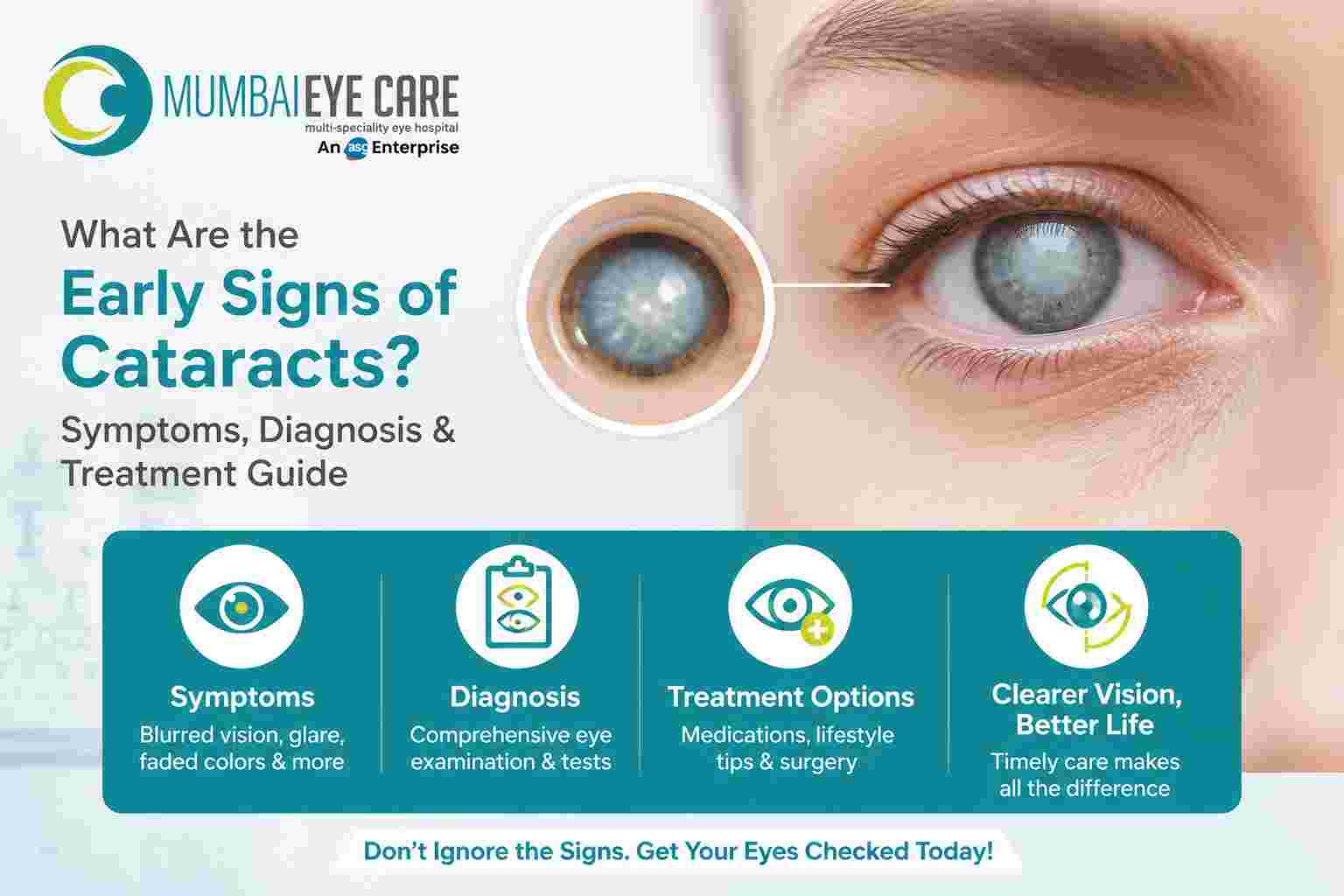
What Are the Early Signs of Cataracts? Symptoms, Diagnosis & Treatment Guide
The early signs of cataracts include blurry vision, difficulty seeing at night, sensitivity to bright lights, faded colors, frequent changes in eyeglass prescription, and seeing halos around lights. Cataracts usually develop gradually, making regular eye examinations essential for early detection and timely treatment.
What Are Cataracts?
A cataract is the clouding of the eye's natural lens, which is located behind the iris and pupil. As the lens becomes cloudy, light cannot pass through clearly, resulting in blurred or distorted vision.
Cataracts are most commonly associated with aging, but they can also develop due to diabetes, eye injuries, prolonged steroid use, excessive UV exposure, smoking, or certain genetic conditions.
Although cataracts are one of the leading causes of vision impairment worldwide, they are highly treatable when diagnosed early.
What Are the Early Signs of Cataracts?
Many people wonder whether cataracts appear suddenly. The answer is no. Cataracts usually develop slowly, and the symptoms become more noticeable over time.
1. Blurred or Cloudy Vision
One of the earliest symptoms is vision that appears foggy or cloudy. Reading, driving, or recognizing faces may become more difficult.
2. Difficulty Seeing at Night
Low-light vision often worsens as cataracts progress. Many people experience increased difficulty while driving after sunset.
3. Sensitivity to Light
Bright sunlight, headlights, or indoor lighting may seem unusually intense and uncomfortable.
4. Halos Around Lights
People with cataracts often notice glowing rings or halos around headlights and streetlights, especially at night.
5. Frequent Changes in Glasses Prescription
If your spectacles require frequent updates without improving vision, cataracts may be affecting the clarity of your eyesight.
6. Faded or Yellowish Colors
Colors may appear dull, faded, or slightly yellow because the cloudy lens filters incoming light.
7. Double Vision in One Eye
Some individuals experience monocular double vision, where one eye sees duplicate images even when the other eye is closed.
Who Is at Risk of Developing Cataracts?
Although aging is the biggest risk factor, cataracts can affect people of different age groups.
Risk factors include:
- • Age above 60 years
- • Diabetes
- • Smoking
- • Excessive UV exposure
- • Previous eye injury
- • Long-term steroid medication
- • Family history of cataracts
- • High blood pressure
- • Obesity
People with these risk factors should schedule regular comprehensive eye examinations.
When Should You Visit an Eye Specialist?
You should consult an eye specialist if you notice:
- • Persistent blurry vision
- • Difficulty reading
- • Trouble driving at night
- • Increased glare from lights
- • Frequent prescription changes
- • Reduced colour perception
- • Vision interfering with daily activities
Early evaluation helps determine whether cataracts or another eye condition is responsible for your symptoms.
If you are looking for comprehensive eye care, the specialists at Mumbai Eye Care provide detailed eye examinations and advanced treatment options.
How Are Cataracts Diagnosed?
A comprehensive eye examination may include:
- • Visual acuity test
- • Slit-lamp examination
- • Dilated retinal examination
- • Intraocular pressure measurement
- • Lens evaluation
These tests help determine the severity of cataracts and rule out other eye diseases such as glaucoma or retinal disorders.
Can Cataracts Be Prevented?
Although age-related cataracts cannot always be prevented, healthy habits may reduce the risk or slow their progression.
Tips to Protect Your Eyes
- • Wear UV-protective sunglasses outdoors.
- • Manage diabetes effectively.
- • Stop smoking.
- • Eat leafy green vegetables and antioxidant-rich foods.
- • Maintain healthy blood pressure.
- • Exercise regularly.
- • Schedule routine eye examinations.
- • Protect your eyes from injuries.
Healthy lifestyle choices support long-term eye health and may reduce the likelihood of vision problems.
What Are the Treatment Options?
The treatment depends on the severity of symptoms.
Early Cataracts
If vision loss is mild, your eye specialist may recommend:
- • Updated glasses
- • Better lighting while reading
- • Anti-glare lenses
- • Regular monitoring
Advanced Cataracts
When cataracts begin affecting daily activities, surgery becomes the most effective treatment.
Modern Cataract Surgery in Ghatkopar involves removing the cloudy lens and replacing it with an artificial intraocular lens (IOL). The procedure is generally quick, performed under local anesthesia, and many patients return to their routine activities within a short period, following their doctor's advice.
When Is Cataract Surgery Needed?
Cataract surgery is generally recommended when vision problems begin interfering with everyday activities such as:
- • Reading
- • Driving
- • Watching television
- • Working on a computer
- • Recognizing faces
- • Performing daily household tasks
Delaying treatment unnecessarily may reduce quality of life, so timely consultation with an experienced eye specialist is important.
If you're considering Cataract Treatment in Ghatkopar, seek advice from a qualified ophthalmologist who can evaluate your condition and discuss the most appropriate treatment options.
Frequently Asked Questions
What is usually the first sign of cataracts?
Blurred or cloudy vision is often the earliest symptom.
Can cataracts develop without symptoms?
Yes. Early cataracts may not noticeably affect vision and are often detected during routine eye examinations.
Is cataract surgery painful?
Cataract surgery is usually performed under local anesthesia, and most patients experience minimal discomfort.
How long does cataract surgery take?
The procedure typically takes around 15–30 minutes, though your total time at the clinic may be longer.
Can cataracts come back after surgery?
The cataract itself does not return. However, some people may develop clouding of the capsule behind the artificial lens, which can often be treated with a simple laser procedure.
At what age do cataracts usually develop?
Most age-related cataracts appear after 60 years, although they can develop earlier in some individuals.
Can lifestyle affect cataract development?
Yes. Smoking, uncontrolled diabetes, prolonged UV exposure, and poor overall health may increase the risk.
How often should adults get an eye examination?
Adults should have regular eye examinations as recommended by their eye care professional, especially after the age of 40 or if they have diabetes, glaucoma risk, or a family history of eye disease.
Conclusion
Cataracts develop gradually, making early detection essential for preserving good vision. Symptoms such as blurry vision, glare, difficulty seeing at night, faded colours, and frequent prescription changes should never be ignored.
Routine eye examinations allow cataracts to be diagnosed before they significantly affect daily life. If treatment becomes necessary, modern cataract surgery offers an effective way to restore clearer vision for many patients.